
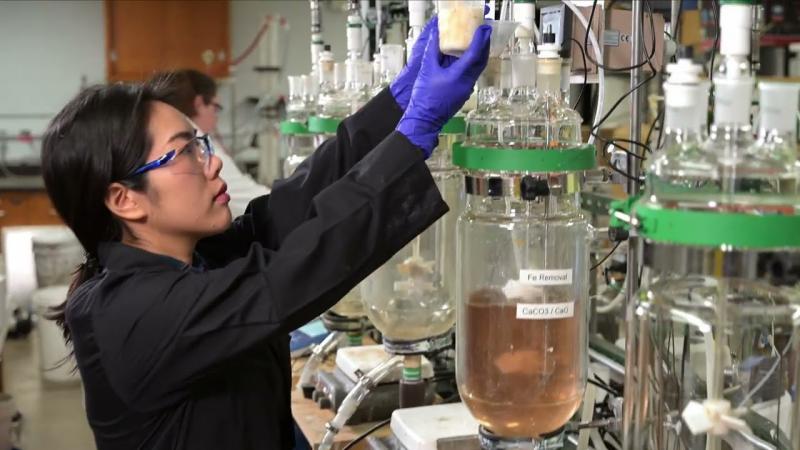
Conducting undergraduate research at an R1-level university gives you an opportunity not only to work alongside professors, but to develop skills that set you apart. Whether you’re looking to continue your studies in graduate school, medical school, or are just fascinated by learning at a different level, there’s a research opportunity here for you. We pay students for 101,000 hours of research every year.
There are many opportunities for student researchers to present their work at Tech's annual Undergraduate Research and Scholarship Symposium, at national conferences, and publish articles in peer-review journals before graduating. Real research adds real value.
Request Information
We won't fill your inbox with stuff you don't need—you'll only get information about Michigan Tech that's helpful to your college decision. Select an area of study to get started:
Form loading . . .
Summer Undergraduate Research Fellowship
Many students find research opportunities by connecting with a favorite professor. You can also participate in our Summer Undergraduate Research Fellowship (SURF). SURF provides annual awards of up to $4,000 to undergraduate students who conduct a research project under the guidance of a Michigan Tech faculty mentor during the summer semester.
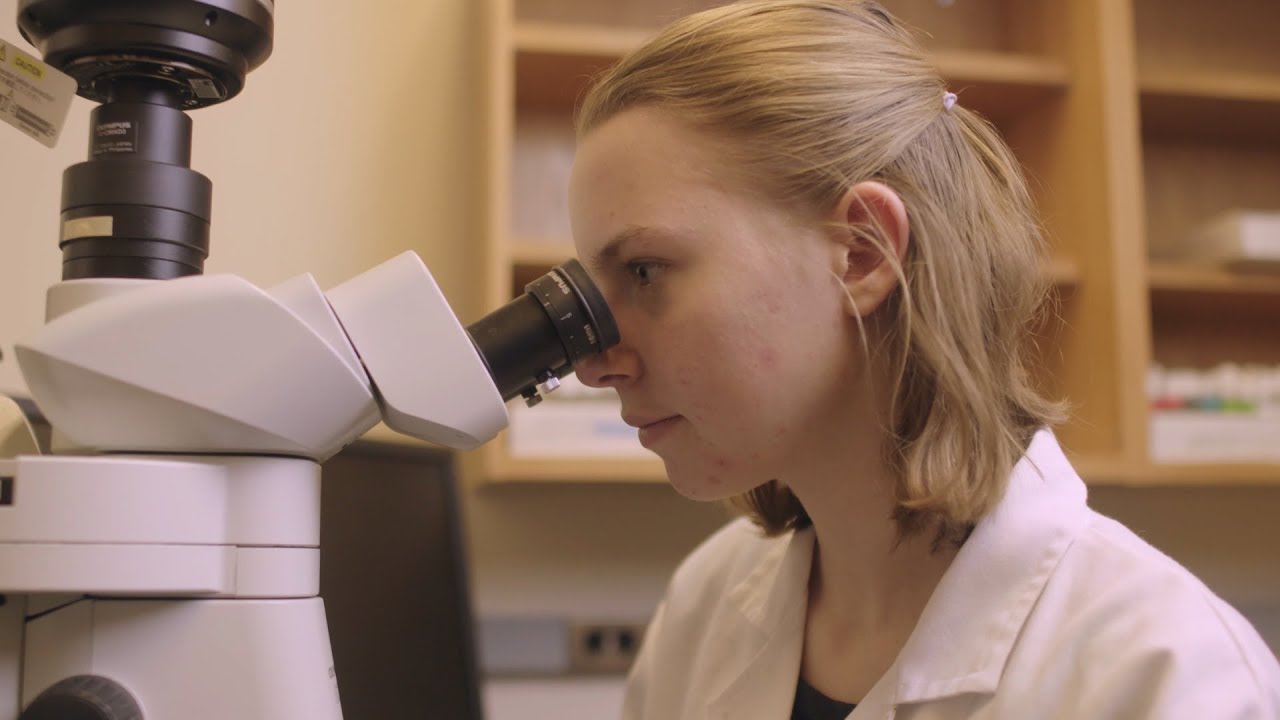
Take Tessa, a biochemistry and molecular biology graduate, whose work focused on the "heroes of genetics". Biologists use fruit flies to study wing spots, metabolism, and aging. That matters because the same genes and major metabolic pathways in fruit flies affect cancer and other diseases in humans.
Undergraduate Research Projects
Here are examples of projects Michigan Tech students work on:
- Applied ecology and environmental science: Effects of Stand Structure on Microclimate and WarmAffinity Seedling Growth in an Adaptive Climate Silvicultural Treatment
- Applied geophysics/geology: Investigating the Origin of the Huron Mountains Mafic Intrusions through Their Rock-Magnetic Properties
- Biomedical engineering: Improving Autism Symptoms via Optogenetic Stimulation in the Dorsal Striatum
- Biochemistry: A Robust Fluorescence Protocol for Assessing Viability in Human Cancer Cells
- Chemical engineering: Generation of Circulating Tumor (ctDNA) Reference Materials for Early Ovarian Cancer Detection
- Computer science: Temporally Driven Binary Segmentation to Extract Entire Arterial Trees in Sequential ICA Frames
- Ecology and evolutionary biology: Using Fatty Acid Analysis to Evaluate the Effects of Human-Altered Landscapes and Sex on the Nutritional Status of Black Vultures
- Electrical engineering: Mentors as Graders: Reconsidering the Power Dynamic in Student Assessment
- Environmental engineering: Investigating Influences on pH in Lake Erie and Lake Superior
- Human biology: Effects of Resolvin D1/FPR2 Activation on Inflammatory Cytokine and Chemokine Expression
in
ADPKD - Mathematics: Quadrature Approximations Within Integral Deferred Correction
- Mechanical engineering: Parametric Study of Aero-PLA Foaming and Its Impact on Mechanical Properties
- Mechatronics: Drones and Thermal Imaging for Wilderness Search and Rescue Efforts
- Medical Laboratory Science: Characterizing Cardiac Inflammation in a Mouse Model of Hypertrophic Cardiomyopathy
- Medicinal chemistry: Applying Hemicyanine-based Ratiometric Fluorescent Probes to Monitor Real-Time Mitochondrial pH in HeLa Cells During Metformin Exposure
- Physics: Investigating the Thickness of Cherenkov Light-Cones Through the Connection Between
Its Radiation
Spectrum and Light Curve as Simulated in Python 3.12 - Social Sciences: Community Perspectives of NGO Effectiveness in California, El Salvador
- Statistics: Hierarchical Clustering to Identify Subgroups of Cardiovascular Health and Alzheimer's Disease
- Sustainability science and society: Economic Impact Analysis of Sustainable Fishery Production Increases in Michigan